Senior housing · Operations
Senior housing — operations, economics & returns
Senior housing combines real estate fundamentals with operating dynamics. Cash flows depend not just on rent but on operator quality, occupancy and care reimbursement. The Danish 80+ population is set to grow from ~356,000 (2025) to well above 510,000 by 2040 — one of the strongest structural tailwinds in Danish real estate. This guide unpacks NOI margins, EBITDAR multiples and operator structures.
Three operating models — different risk profiles
Triple-net lease: investor owns the building, operator pays fixed rent. Investor has zero operational exposure. Cap rates 4.75-5.50% prime. Most common for pension fund acquisitions. Rent typically indexed to CPI.
Master lease + operator: investor owns and signs single master lease with operator. Operator runs all units. Investor has covenant exposure to operator only. Cap rates 5.25-6.25%.
OpCo-PropCo split: investor owns property and shares EBITDAR upside via revenue-share lease. Higher upside, more variability. Cap rates initial 5.50-7.00% with growth potential. Common for family offices and PE.
SFDR Article 8/9 alignment is achievable across all three structures with proper ESG documentation. Most Danish friplejehjem (private care homes) qualify for Article 8 due to social impact contribution.
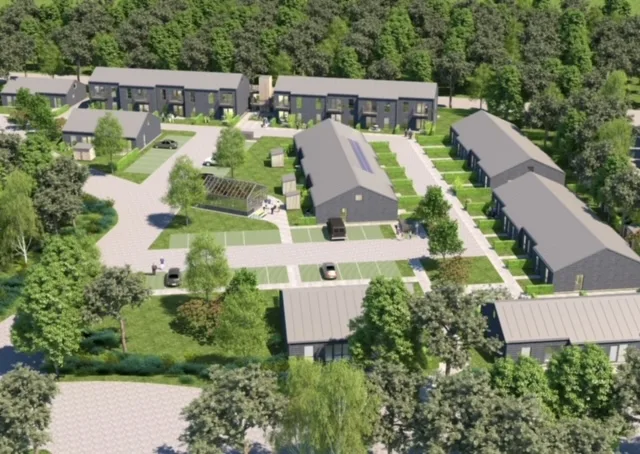
Senior housing economics 2026
Indicative benchmarks for institutional-grade Danish senior housing.
| Metric | Friplejehjem (private) | Senior assisted living | Independent senior housing |
|---|---|---|---|
| Prime cap rate | 4.75–5.50% | 5.25–6.00% | 5.50–6.50% |
| WAULT | 15–25 yrs | 10–20 yrs | 5–10 yrs (residential) |
| Operator covenant | Critical (regulated) | Critical | Less critical |
| NOI margin | 85–92% | 80–88% | 78–85% |
| EBITDAR multiple | 12–16x | 10–14x | 9–12x |
| SFDR fit | Article 8/9 | Article 8 | Article 8 |
| Typical ticket | DKK 50–500m | DKK 75–300m | DKK 50–200m |